
Why
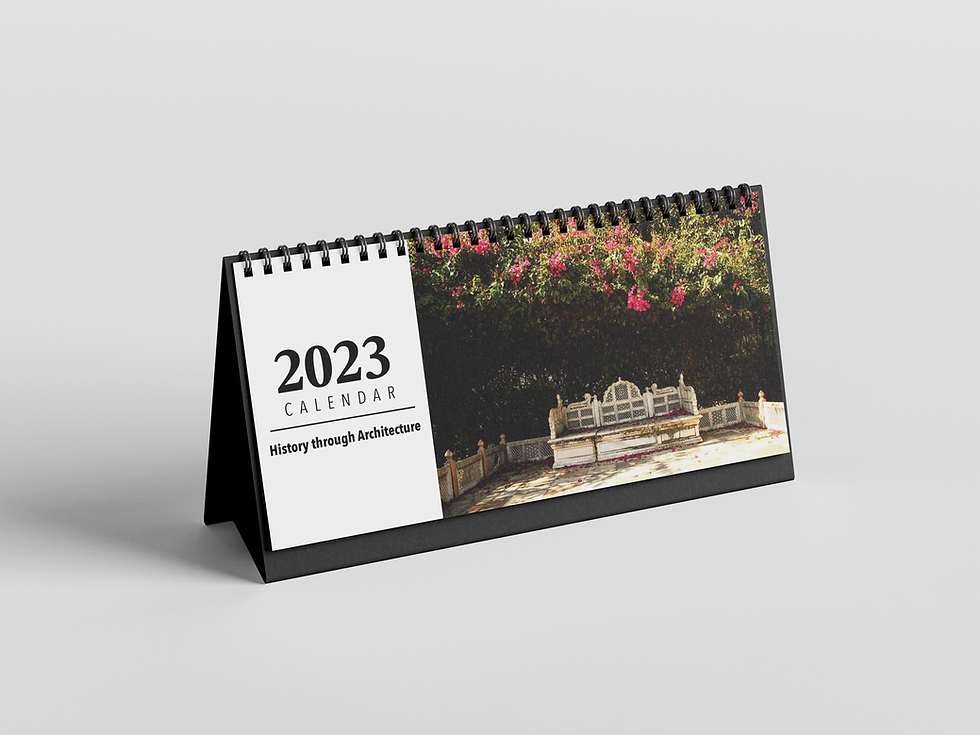
The History Through Architecture calendar was created to explore and document the historical significance of architectural spaces that tell the story of a place, its geography, people, and survival. This calendar takes the viewer on a journey through six remarkable architectural sites, each with its own unique narrative—some iconic, others less known, but all significant in understanding the evolution of the region and its culture. Through these architectural spaces, the calendar aims to preserve and share the rich history embedded in the structures, offering insights into how the past has shaped the present.

How
The design process included:
Photography and Storytelling: Specially taken photographs of each architectural space, showcasing its design, intricate details, and historical significance. Each image captures both the grandeur and the subtle, often overlooked features of these structures.
Historical Context: Extensive research into the history of each monument, providing background on its construction, significance, and impact on the region’s cultural heritage. Each photo is accompanied by detailed descriptions explaining the architectural style, key events in its history, and its place within the local context.
Design and Layout: A clean and minimalistic design approach that highlights the architecture itself, ensuring that the focus remains on the structures and their historical importance. The calendar includes architectural elements such as columns, arches, and decorative details to tie the theme together.
What
The final calendar features:
Six Architectural Spaces: Each month features a different architectural site, with high-quality images of the space, from exterior views to intricate details that reveal the uniqueness of the design.
Chhatardi: The royal cenotaphs dedicated to the Jadeja dynasty kings, with red sandstone structures depicting hunting scenes, idol worship, and animals.
Darbargadh: The palace complex of Bhuj, including the Prag Mahal, Aaina Mahal, and Rani Mahal, each showcasing a blend of Rajput and Mughal architectural styles, reflecting the evolution of the region’s royal history.
Informative Captions: Each photograph is accompanied by a description that explains the architectural style, the history of the monument, and the key figures involved in its creation. For example, the Prag Mahal’s Romanesque-Gothic style and Aaina Mahal’s intricate mirror work are highlighted for their cultural and architectural importance.
Impact of the 2001 Earthquake: Some descriptions touch on the impact of the 2001 earthquake, with mentions of the damage sustained by structures like the Rani Mahal, showing how architecture can endure and adapt to challenges over time.


